Why Do Toddler Tantrums Happen? The Hidden Language of Meltdowns
· Early Childhood · By The CCD Clinical Team · Clinically reviewed by Lisa R. Savage, LCSW
Last Tuesday, my neighbor Sarah watched her 4-year-old son collapse into a screaming heap because his sandwich was cut into triangles instead of squares. “I felt like such a failure,” she told me later. “Over a sandwich shape.” If you have been there, and most parents have, you know that sinking feeling. However, what […]
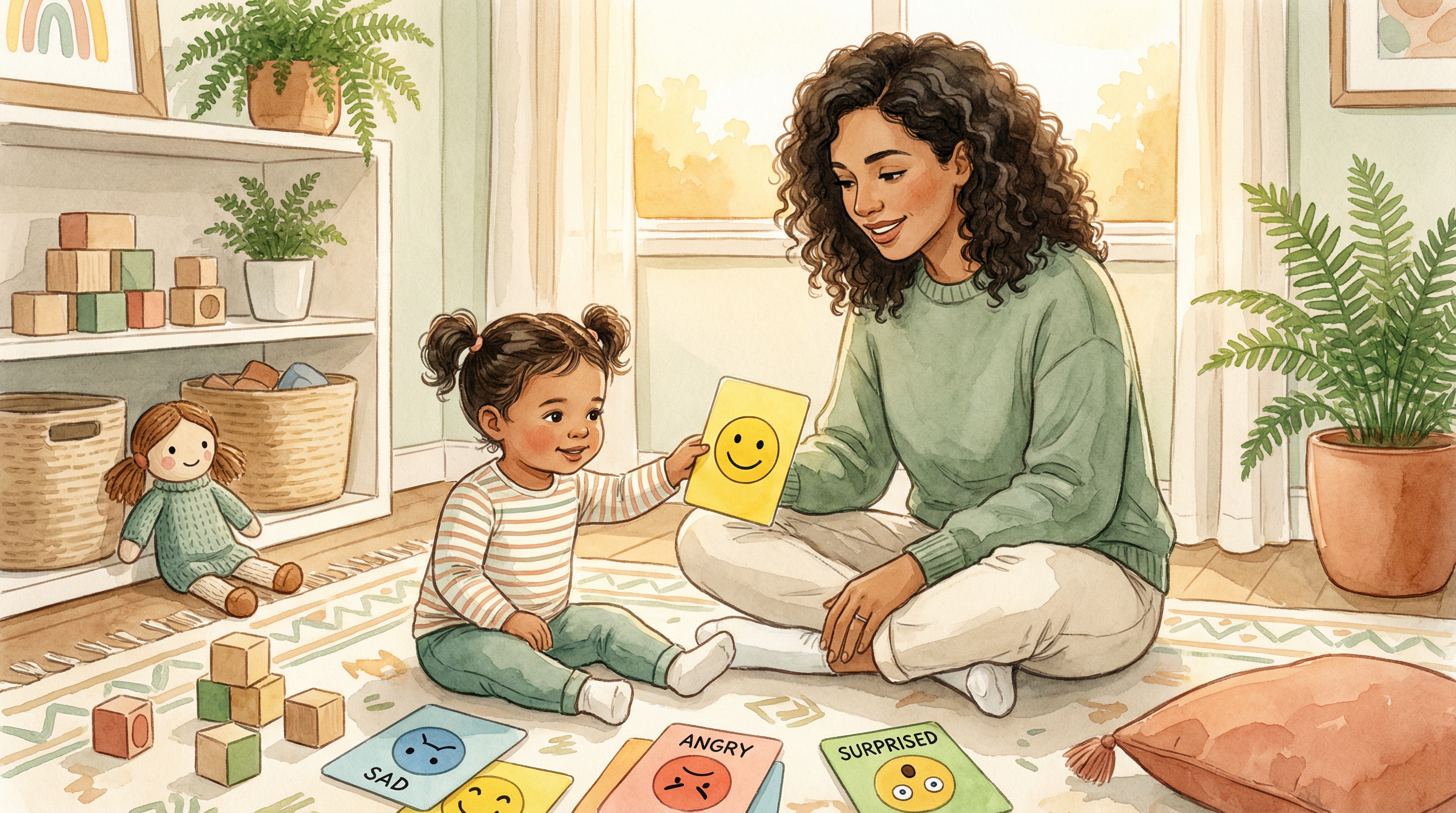

Last Tuesday, my neighbor Sarah watched her 4-year-old son collapse into a screaming heap because his sandwich was cut into triangles instead of squares. “I felt like such a failure,” she told me later. “Over a sandwich shape.”
If you have been there, and most parents have, you know that sinking feeling. However, what if I told you that meltdown was not about the sandwich at all?
Emotional Regulation: It is Not What You Think
Emotional regulation is not about producing calm, compliant children. It is about helping kids develop the internal tools to navigate their intense inner world. Think of it as teaching them to be their emotional weather forecasters, recognizing when storms are brewing and knowing what to do when they hit.
For children ages 2-5, this process appears chaotic because their emotional brain (the limbic system) is fully online, while their rational brain (prefrontal cortex) continues to develop until they are 25. They are driving a Ferrari with bicycle brakes.
The Real Triggers Behind the Storm
Research from Dr. Dan Siegel suggests that tantrums are rarely caused by children being “difficult.” Instead, they are usually signals of these deeper needs:
The Invisible Load (Ages 2-4): Young children can handle about 2-3 transitions per day before their emotional capacity is overwhelmed. That grocery store meltdown is about the morning rush, the unexpected playdate cancellation, and now being asked to leave the toy aisle.
The Connection Crisis (Ages 3-6): Children who seem to “save their worst behavior for mom” are not being manipulative—they are showing you they trust you enough to fall apart safely with you.
The Autonomy Struggle (Ages 4-8): As children develop independence, they often feel torn between wanting to do things on their own and needing help. This internal conflict can manifest as explosive frustration over seemingly simple tasks.
Beyond the Tantrum: Red Flags That Signal Deeper Struggles
While all children have meltdowns, watch for these patterns that might indicate your child needs additional support:
Ages 2-4: Tantrums lasting more than 20 minutes regularly or inability to be comforted by a trusted caregiver. Ages 5-7: Daily meltdowns, aggressive behavior toward siblings or pets, or regression in previously mastered skills. Ages 8+: Emotional outbursts that seem disproportionate to triggers, social withdrawal, or persistent sleep disruptions
The Co-Regulation Secret Most Parents Miss
Here is what changed everything for Sarah: she learned about co-regulation. Instead of trying to logic her son out of his feelings, she started regulating her nervous system first.
When her son melted down, Sarah would:
- Take three deep breaths (modeling calm)
- Lower her voice and soften her facial expression
- Offer physical comfort: “I am going to sit right here with you.”
- Validate without fixing: “You are upset about that sandwich. Big feelings are hard.”
Within two weeks, his meltdowns shortened from 30 minutes to 5-10 minutes. The magic was not in what she said but in how she remained so regulated.
Age-Specific Strategies That Work
Ages 2-3: The Foundation Years
- Create a “cozy corner” with soft textures and dim lighting
- Use simple emotion words: “Mad. Sad. Scared.”
- Practice “butterfly hugs” (crossing arms over chest and gently patting)
- Read “In My Heart” by Jo Witek for interactive emotional exploration
Ages 4-5: The Building Years
- Introduce the “emotion thermometer”—help them rate feelings on a scale of 1-10
- Practice “belly breathing” with stuffed animals, rising and falling on their stomach.
- Use “The Way I Feel” by Janan Cain to expand emotional vocabulary
- Create family emotion check-ins at dinner
Ages 6-8: The Integration Years
- Teach the “STOP” technique: Stop, Take a breath, Observe feelings, Proceed with choice.
- Practice perspective-taking: “How do you think your sister felt when…”
- Use journaling or drawing to process difficult days
- Introduce simple mindfulness with apps like “Headspace for Kids.”
The Movement-Regulation Connection
Occupational therapists have long known what parents are just discovering: Movement is medicine for dysregulated nervous systems. However, not all Movement is created equal.
Heavy Work (pushing, pulling, carrying): Helps organize the nervous system. Rhythmic Movement (swinging, rocking): Provides calming sensory input. Bilateral Movement (cross-crawls, jumping jacks): Integrates left and right brain.
Try this: Next time your child is ramping up, offer “going for a quick walk around the block” instead of “calm down.” You will be amazed at the difference.
Reframing the Difficult Moments
Instead of asking, “How do I stop this tantrum?” try asking, “What is my child’s nervous system trying to tell me right now?”
That shift in perspective transforms everything. Suddenly, you are not battling your child; you are partnering with them to solve a problem their body is having.
The Power Struggle Trap (And How to Escape It)
When children are dysregulated, their brains literally cannot access logic. Saying “calm down” to a child who is having a meltdown is like telling someone having a heart attack to “just relax.”
Instead of:
- “Stop crying right now.”
- “You are being ridiculous.”
- “Big kids do not act like this.”
Try:
- “This feels big right now.”
- “I am here with you.”
- “Your body is having big feelings.”
When Professional Support Makes the Difference
Consider reaching out to a child therapist if:
- Tantrums consistently last over 30 minutes past age 4
- Your child regularly hurts themselves or others during meltdowns
- You are seeing regression in multiple developmental areas
- Your family feels like you are walking on eggshells daily
Play therapists, in particular, specialize in helping children process emotions through their natural language: play.
Building Your Child’s Emotional Toolkit
The goal is not to eliminate difficult emotions—it is to help children develop a diverse set of tools for managing them. Some children need Movement; others need quiet spaces. Some individuals require verbal processing, while others need creative expression.
Pay attention to what naturally soothes your child and build on those strengths. The sensitive child who notices everything might benefit from sensory-friendly spaces. The high-energy child might need more physical outlets before challenging transitions.
The Long Game: Why This Work Matters
Every time you stay regulated during your child’s dysregulation, you are shaping their developing brain. You are teaching them that big feelings are survivable, that they are worthy of comfort even in their worst moments, and that emotions are information, not emergencies.
This is not just about stopping tantrums—it is about raising individuals who can navigate stress, maintain healthy relationships, and recover from life’s inevitable challenges.
Sarah’s son still occasionally melts down over the shapes of sandwiches. However, now she sees it differently. “I realize he is not giving me a hard time,” she says. “He is having a hard time. Moreover, my job is to help him through it.”
That shift in perspective? It changes everything.
If you’ve tried everything and nothing seems to be helping, call www.ccddelaware.com. We have specialists in Parent-Child Interaction Therapy who can help.
Learn more about emotional regulation by clicking here https://childmind.org/article/can-help-kids-self-regulation/